Browser Puzzle Hybrids Use Daily Challenge Loops to Guide Players into Extended Multiplayer Strategy Networks
Devon Patterson · Oct 17, 2026
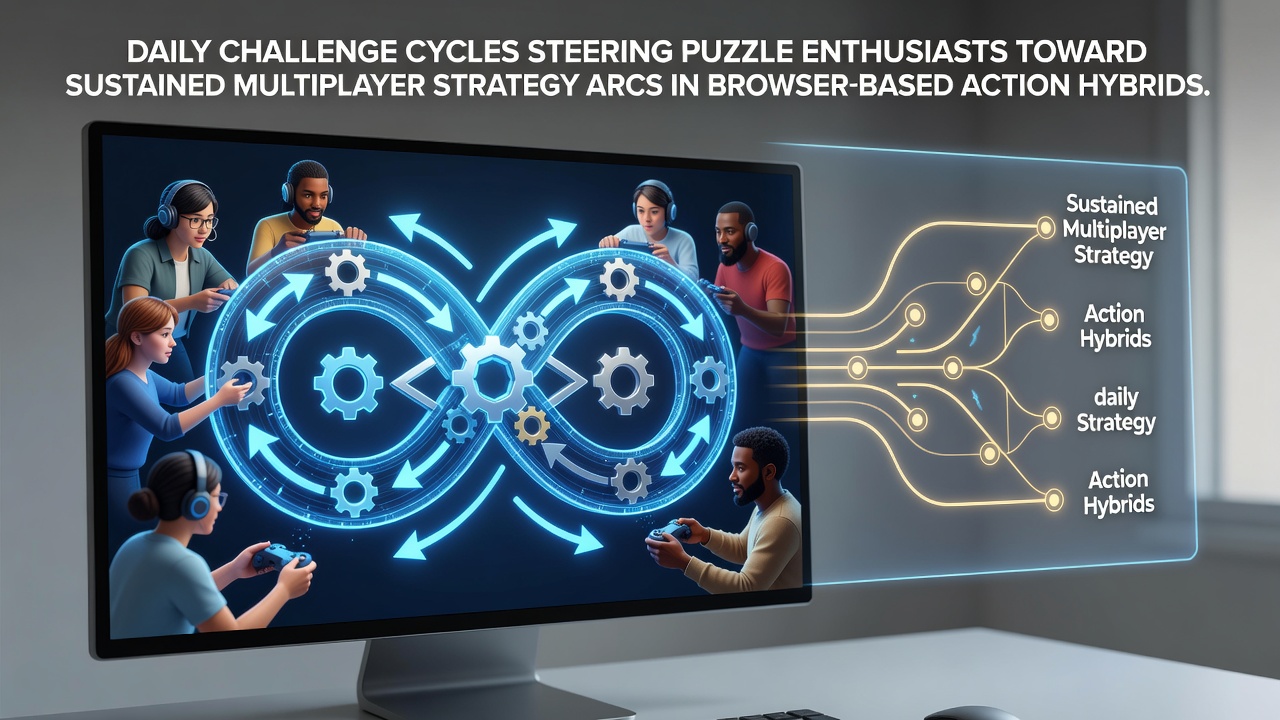
Browser Puzzle Hybrids Use Daily Challenge Loops to Guide Players into Extended Multiplayer Strategy Networks
Browser-based action hybrids combine quick puzzle elements with tactical multiplayer components, and daily challenge cycles serve as the entry mechanism that moves enthusiasts from short sessions into longer strategy arcs. These systems operate through recurring tasks that reset every 24 hours, rewarding consistent logins with incremental progress that carries over into cooperative or competitive modes. Research from industry reports shows participation rates in such cycles rising steadily through 2025 and into October 2026, with player data indicating higher retention when daily tasks link directly to multiplayer objectives.
Mechanics of Daily Cycles in Hybrid Games
Daily challenges typically present a mix of puzzle-solving objectives and light action requirements that players complete in browser windows without downloads. Completion grants resources or unlocks that feed into broader strategy layers, such as team formations or map control elements. Observers note that this structure creates a feedback loop where puzzle completion becomes a prerequisite for sustained multiplayer participation, and data from platform analytics reveal average session lengths extending from five minutes in isolated puzzle play to over thirty minutes once strategy components activate.
Systems often track streaks across days, which accumulate bonuses that benefit entire player groups rather than individuals alone. This design encourages coordination because shared rewards appear only when multiple participants meet collective thresholds. Studies from academic sources confirm that such mechanics appear across numerous titles, with patterns documented in European gaming research centers highlighting increased cross-session continuity.
Pathways from Quick Puzzles to Sustained Strategy
Players begin with isolated puzzle encounters that require minimal commitment, yet the daily reset pulls them back repeatedly. Over successive cycles, accumulated assets translate into advantages within multiplayer arenas where tactical decisions determine outcomes. Evidence suggests this progression happens organically as puzzle enthusiasts encounter opportunities to apply their resources in group contexts, leading to the formation of recurring alliances. Figures from platform telemetry indicate that roughly 40 percent of daily challenge completers extend their play into strategy modes within the first week, a metric tracked consistently through October 2026.

One documented case involves a hybrid title where puzzle grids feed energy into strategic unit deployment, and daily milestones directly influence team rankings. Participants who maintain challenge streaks report higher involvement in long-form campaigns, while those who skip cycles fall behind in resource accumulation. Researchers at institutions like those affiliated with Australian interactive media studies have mapped these trajectories, showing clear shifts from solitary quick-play to networked strategy ecosystems.
Integration with Action and Multiplayer Layers
Action sequences in these hybrids interrupt pure puzzle flow, introducing timing-based elements that prepare players for real-time multiplayer exchanges. Daily challenges incorporate both components so that puzzle mastery supports action performance, which in turn unlocks strategy depth. Data indicates that hybrids employing this layered approach see elevated community formation, with forums and in-game chat volumes rising proportionally to cycle completion rates. Industry organizations such as those representing North American developers track these integrations and note their role in bridging casual entry points to committed play patterns.
Seasonal adjustments to daily tasks, often aligned with calendar events, further steer engagement toward extended arcs. During October 2026 periods, for instance, themed challenges have incorporated narrative elements that reward cooperative strategy, drawing in participants who initially approached the games for standalone puzzles. This temporal layering maintains momentum without requiring constant new content creation.
Observed Player Retention Patterns
Retention metrics demonstrate that daily cycles reduce churn by providing predictable yet evolving objectives. When these cycles connect to multiplayer strategy, drop-off rates decrease further because social accountability reinforces individual habits. According to reports issued by the Entertainment Software Association, browser hybrids exhibit some of the strongest month-over-month retention figures among free-to-play formats, with daily loops cited as a primary driver. Cross-regional comparisons, including data from Canadian digital entertainment analyses, reveal similar trends where puzzle-to-strategy transitions correlate with community stability.
Player movement data shows clusters forming around shared challenge deadlines, leading to spontaneous group strategy sessions. These clusters persist beyond individual cycles, evolving into sustained networks that plan around weekly or monthly resets. The pattern holds across multiple titles, suggesting a structural feature of the genre rather than isolated design choices.
Conclusion
Daily challenge cycles in browser-based action hybrids function as structured gateways that convert short puzzle engagements into prolonged multiplayer strategy involvement. Metrics collected through October 2026 continue to reflect this steering effect, supported by platform data and regional industry observations. The resulting ecosystems demonstrate how recurring mechanics can scale individual participation into collective, ongoing play without altering core browser accessibility.